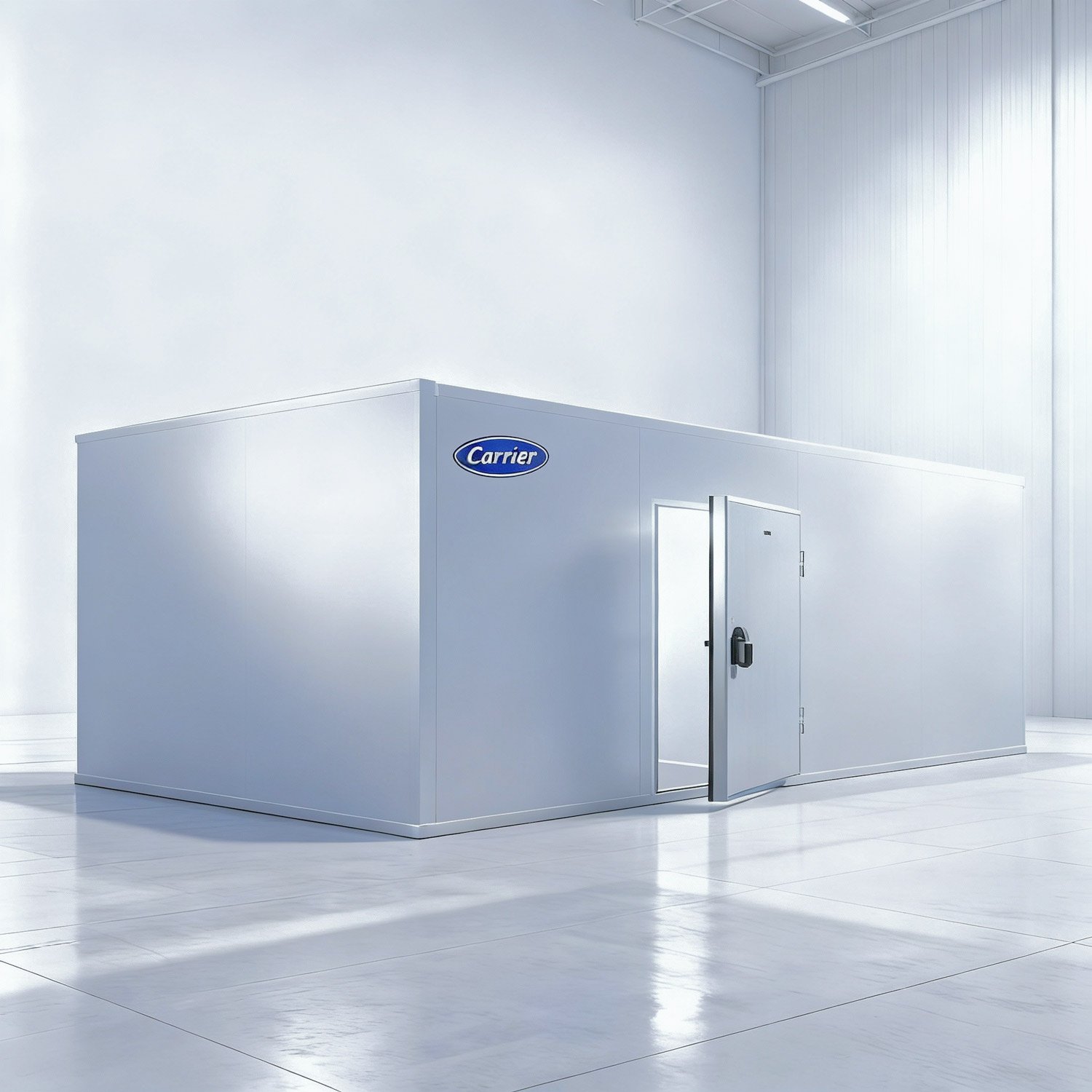
Cold Rooms (Chilled & Freezer) in Makkah
Cold rooms in Makkah—engineering & validation, supply and installation, scheduled defrost, remote monitoring and stabilization tests to ensure product safety and energy efficiency by Hboob.
Makkah — Freezer Rooms (Design, Approval, Supply, Installation & Commissioning)
In-Depth Technical Overview
Freezer rooms are insulated cold storage facilities designed to hold products at sub-zero temperatures (common: -18°C to -25°C for frozen foods). Their performance rests on three pillars:
- Tight thermal envelope (high-density sandwich panels for walls/ceiling/floor),
- Reliable refrigeration system (condensing unit + air coolers + control/defrost system),
- Operation & monitoring that ensures temperature stability and product safety.
Key Components:
- Sandwich panels (PU/PIR): typical 100–150 mm for freezers, Cam-Lock joints, galvanized/stainless skins, and anti-corrosion finishes.
- Insulated floors: high-density thermal insulation layers + vapor barrier + anti-slip finish, with expansion detailing and aluminum trims.
- Freezer doors: hinged/sliding with thermal breaks, perimeter heaters to prevent gasket freezing, and internal safety latches.
- Refrigeration units:
- Air coolers with quiet fans, electric/hot-gas defrost heaters and scheduled defrost cycles.
- Condensing units (air- or water-cooled) with scroll/recip/semi-hermetic compressors based on load.
- Expansion devices (TEV/EEV) and driers/sight glasses per design.
- Controls & monitoring: thermostat/PLC, data logging, open-door/power-failure alarms, and remote monitoring when required.
- Ventilation/humidity management: anti-condensation detailing at surfaces/thresholds, air curtains/PVC strip curtains at traffic points.
Scope by “Hboob Air-Conditioning, Refrigeration & Ventilation” in Makkah
Study & Design:
- Cooling load calculation (product, packaging, infiltration/door openings, internal loads), defining the setpoint, selecting insulation thickness, and sizing equipment.
- Floor detailing (insulation + vapor barrier + finish), safe drainage points, and thermal-bridge mitigation.
- Piping layouts, air cooler placement for uniform air distribution, and proper defrost scheduling.
Supply & Compliance:
- Approved panels and doors, condensers and air coolers from trusted brands, and accessories (gaskets/heaters/thermometers).
- Technical submittals, material certificates, and approval files for owner/consultant sign-off.
Installation & Testing:
- Panel erection with leak-tight joints, food-grade sealants, and verified squareness.
- Refrigeration piping, pressure/leak tests, vacuum and refrigerant charging per OEM tables.
- Performance and stabilization tests to confirm achieving/holding the target temperature under load.
Commissioning & Validation:
- Sensor/thermostat calibration, defrost scheduling, high/low temperature and door-ajar alarms, and recovery tests after door opening.
- Handover of as-built drawings, equipment schedules, O&M manuals, and HACCP/food-safety support plans (per client policy).
Maintenance & Support in Makkah:
- Preventive maintenance contracts (coil cleaning, door/threshold heater checks, alarm tests), staff training, and local breakdown response.
Use Cases in Makkah
- Foodservice supply chains/central kitchens, frozen food warehouses, confectionery/bakeries, pharmacies and healthcare items requiring sub-zero storage.
Why Hboob?
- Design based on real cooling load, not generic assumptions.
- Thermal-bridge control and floor detailing that prevent condensation and structural damage.
- Lower total cost of ownership via correct defrost scheduling, tight insulation, and efficient fans.
FAQ — Makkah
What is the standard temperature? Typically -18°C to -25°C; finalized per product type and internal regulations.
Do you offer remote monitoring? Yes—temperature logs and SMS/Email alarms on request.
Timeline? Depends on area/equipment scope; a schedule is provided after the site visit.
Warranty? OEM component warranty plus Hboob installation warranty.